Sacred Languages | Sanskrit, Hebrew, and Lost Ancient Voices
Across mystical and esoteric traditions, language is not merely a tool for communication — it is vibration, frequency, and creation itself.
Ancient philosophies taught that sound was the first manifestation of energy — that the universe itself was spoken or sung into being. Sound was seen as the very breath that set the cosmos in motion.
Among the many languages of antiquity, two have been revered not merely for their literary or cultural value, but for their spiritual resonance:
Sanskrit, the sacred language of Hinduism, and Hebrew, the language of Judaism. Both are seen as sacred languages, holding not only linguistic but spiritual and vibrational significance. They are invoked in rituals, chants, magical alphabets, and spiritual sound work across cultures—even beyond their original religious contexts.
In that way, they have been adopted into esoteric, Hermetic, and magic traditions for centuries, seen as carriers of the “primordial frequencies” that bridge the human and the divine.
A Preserved Sacred Language
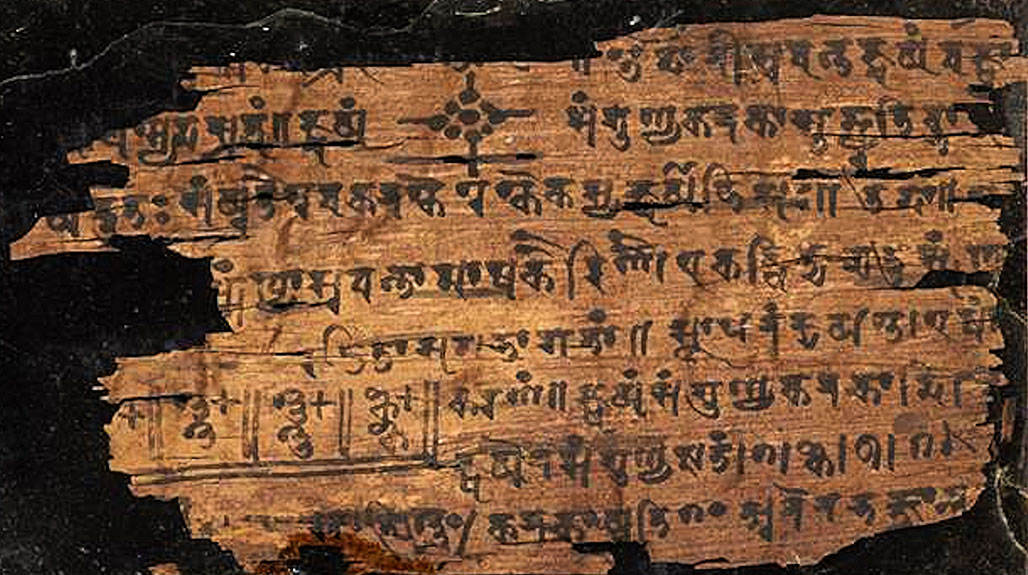
Sanskrit emerges from the Indo-Aryan family as one of the oldest languages still studied and used in sacred practice. Its earliest form, Vedic Sanskrit, appears in the Rigveda (c. 1500–1200 BCE), predating most recorded scripture.
Sanskrit has been maintained and preserved through oral transmission, the accuracy of Vedic chanting ensured that Sanskrit’s sounds remained unchanged for over three millennia.
Though no longer a common spoken language, it has never fallen silent. It is vibrantly alive in temples, ritual recitations, mantras and philosophical texts.
Nearly every major language of India – Hindi, Marathi, Bengali, and others – descends from Sanskrit’s structure and sound patterns.
Sanskrit has survived as an unbroken continuous current of sacred sound flowing from antiquity to the present.
A Reconstructed Sacred Language
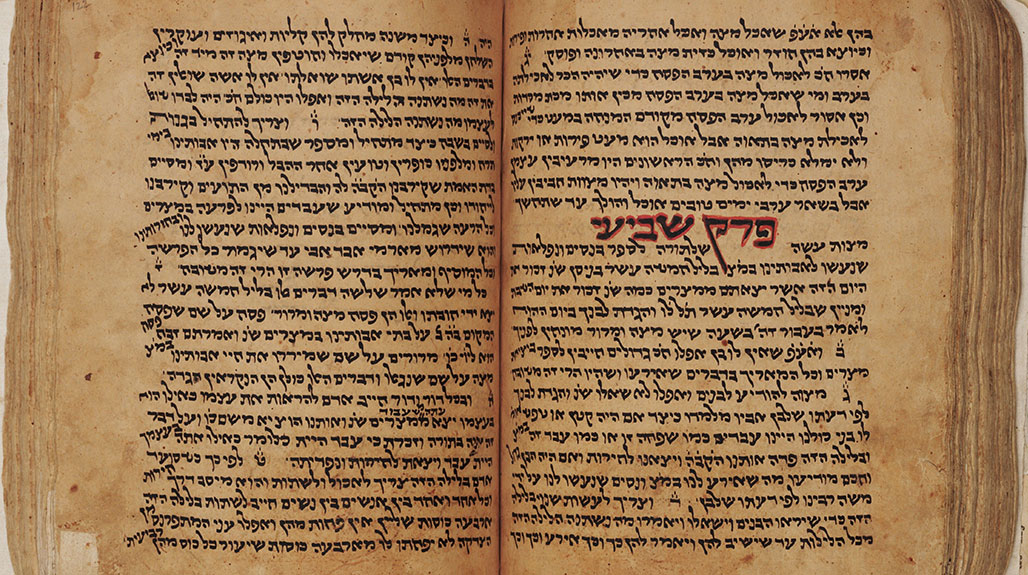
Ancient Hebrew developed around c. 1000 BCE among the ancient Israelites, part of the Northwest Semitic branch of Afro-Asiatic languages. It served as the language of the Hebrew Bible (Tanakh).
Over the centuries, ancient Hebrew gradually ceased to be a spoken language. It transitioned from everyday speech to a primarily liturgical and scholarly language, carefully preserved by rabbis, mystics, and poets. Meanwhile, Aramaic, and later Arabic and Yiddish, became the ordinary tongues of the Jewish people.
In the late 19th century, scholars and linguists reconstructed Hebrew into a modern, functional language, drawing on ancient grammar, biblical texts, and contemporary linguistic principles.
Where Sanskrit represents unbroken preservation, Hebrew demonstrates an act of linguistic revival and renewal – a language consciously brought back into voice.
The Science of the Sacred Word
Both Sanskrit and Hebrew are built upon the belief that sound creates form — that vibration shapes reality. This principle is echoed in both mystical philosophy and modern acoustics.
Every syllable in Sanskrit carries a vibratory geometry known as Nāda, believed to resonate with cosmic frequencies. In that way, chanting mantras is said to harmonize consciousness with these universal rhythms.
The Hebrew letters themselves are believed to be creative forces – the instruments through which God spoke the world into existence.
Both traditions share a deep recognition: that sound is not symbolic, but causal — a vibrational bridge between thought and manifestation. Sound gives birth to structure. Modern science, has begun to explore this ancient insight through cymatics — the study of how sound frequencies organize matter into geometric patterns.
Echoes of Older Tongues
While Sanskrit and Hebrew remain among the oldest sacred languages still in use, they are not the first. Long before them, civilizations like Sumerian (c. 3200 BCE) and Egyptian (c. 3100 BCE) recorded the earliest human words in clay and stone.
Yet their spoken traditions – the sounds, chants, and tonal vibrations behind those written signs – have largely been lost.
Many mystical and esoteric schools propose that early proto-languages once carried spiritual codes of sound, much like Sanskrit and Hebrew.
Among these speculative traditions are the Elder Futhark Runes of Northern Europe – symbols often associated, through mythic accounts, with a shared prehistoric tongue and ancient sound-based magic.
Though historical evidence for such continuity remains scarce, these metaphysical ideas reflect a timeless intuition: that sacred language was once a universal resonance, a bridge between humanity and the creative principle of the cosmos.
Final Thoughts on Sacred Sounds
Sanskrit and Hebrew stand today as two remarkable survivors of the world’s oldest linguistic lineages.
One maintained through unbroken spiritual preservation, the other rebuilt from ancient memory – both testaments to humanity’s reverence for the power of the spoken word.
Behind their alphabets and phonetics lies a shared belief:
that language itself – when pure, intentional, and sacred – is creation in motion.
Before alphabets, before ink, before speech itself, there was only resonance – the primordial hum from which all things emerge.
To speak, to chant, to name – is to participate in the continuous expansion of creation.
 Previous Post
 Next Post