
Eye Care for Artists | Preventing Eye Strain & Vision Loss
For many artists, designers, writers, and digital creators, our eyes are among our most important tools. Whether you spend hours painting fine details on a canvas or working in front of a computer screen, your visual system is constantly being asked to perform at a high level.
As we get older, it is natural for the eyes to change. However, there are several simple habits and lifestyle choices that can help maintain healthy vision and reduce eye strain over time.
This article explores what happens to our eyesight as we age, what habits support long-term eye health, and what artists and screen users can do to protect their vision.
How Eyesight Changes With Age
Many of the changes people experience with their eyes are completely normal.
Presbyopia (near focus changes)
Usually beginning in the early to mid-40s, the lens of the eye becomes less flexible. This makes it harder to focus on objects up close.
Common signs include needing to hold things farther away, requiring brighter light when reading or painting, and experiencing increased eye fatigue during detailed work.
Many artists eventually use reading glasses or progressive lenses to compensate for this change.
The lens slowly yellows
Over time the natural lens of the eye becomes slightly more yellow. This process is gradual and usually goes unnoticed in everyday life because the brain adapts.
However, this change can affect the perception of certain colors, especially blue, violet, and cooler tones, and artists may find they need stronger lighting or clearer daylight to judge subtle differences.
Reduced contrast sensitivity
Another subtle change is a small reduction in the ability to detect very fine contrast differences. This makes good lighting increasingly important for activities such as painting, drawing, digital design and reading.
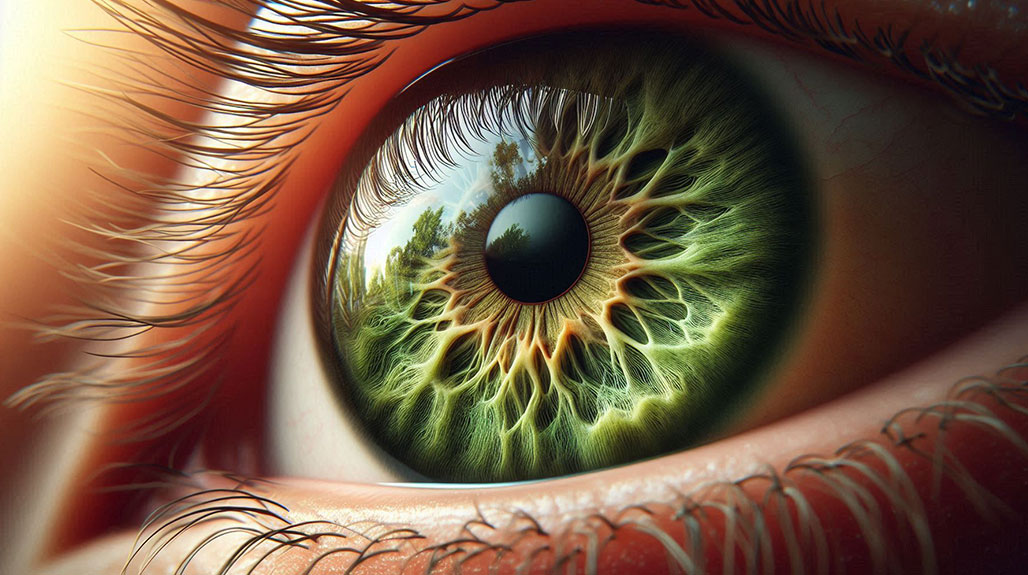
Common Causes of Eye Strain for Artists
Many cases of eye fatigue are not caused by aging, but by bad habits and simple environmental factors.
Working in low light
Dim lighting forces the eyes to work harder to distinguish edges, colors, and contrast. This can quickly lead to fatigue.
A better approach is bright but soft lighting that evenly illuminates the work surface.
Poor lighting direction
Lighting that comes from the wrong direction can create glare or shadows on the canvas.
A common setup for painters is to have light coming from above and slightly to the side, usually from the opposite side of the dominant hand.
This reduces shadows cast by the hand and improves visibility.
Mixed color temperatures
Using several different types of bulbs (for example warm tungsten combined with cool LED light) can make color perception more difficult.
Artists often benefit from consistent lighting in the daylight range around 5000–5500K.
Long periods of close focus
Painting details, reading, or staring at screens for long stretches forces the focusing muscles of the eye to remain contracted.
Over time this can create eye fatigue and tension headaches. Taken together, these small factors can place continuous strain on the eyes without being immediately noticeable.
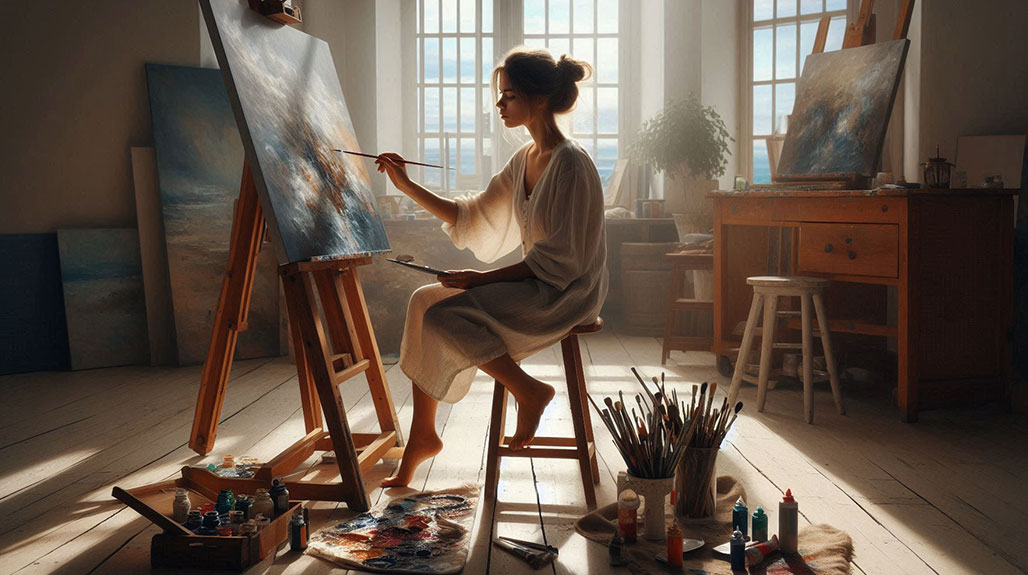
20-20-20 Rule to Reduce Eye Strain
One of the simplest techniques recommended by optometrists is the 20–20–20 rule for reducing eye strain.
Every 20 minutes, look at something about 20 feet (6 meters) away for 20 seconds. This allows the focusing muscles of the eye to relax and reset.
This practice is especially helpful for artists doing detailed work, writers, programmers, and anyone working on screens.
During this short break, it also helps to blink slowly several times to rehydrate the surface of the eyes.
A Simple Vision Exercise
Another useful habit to reduce eye fatigue is near–far focusing.
This exercise takes about one minute and helps maintain flexibility in the eye’s focusing system.
- Hold your thumb or a pen about 25–30 cm from your eyes.
- Focus on it clearly.
- Then look at an object across the room or outside a window.
- Alternate between near and far focus about 10–15 times.
This exercise relaxes the eye muscles and can help prevent the visual system from becoming locked into close focus.
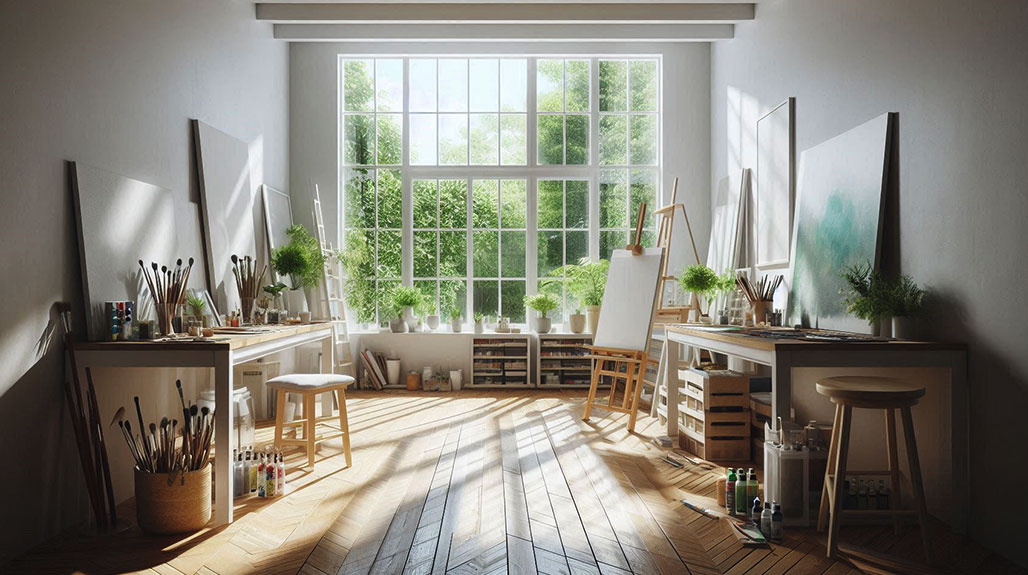
Studio Habits That Support Healthy Vision
Small adjustments in how you work can make a significant difference over time.
Helpful habits include:
- stepping back regularly to view your work from a distance
- working with consistent daylight-balanced lighting
- avoiding glare or reflections on the painting surface
- taking short breaks every 20–30 minutes
- blinking consciously during periods of intense focus
Together, these habits create a more supportive environment for both your eyes and your creative process.
Nutrition That Supports Eye Health
Diet also plays a role in maintaining healthy vision. Certain nutrients are particularly important for the retina, lens, and blood vessels of the eye.
Foods commonly associated with eye health include:
- kale
- spinach
- broccoli
- carrots
- sweet potatoes
- bell peppers
- blueberries
- eggs
- salmon
- sardines
- almonds
- pumpkin seeds
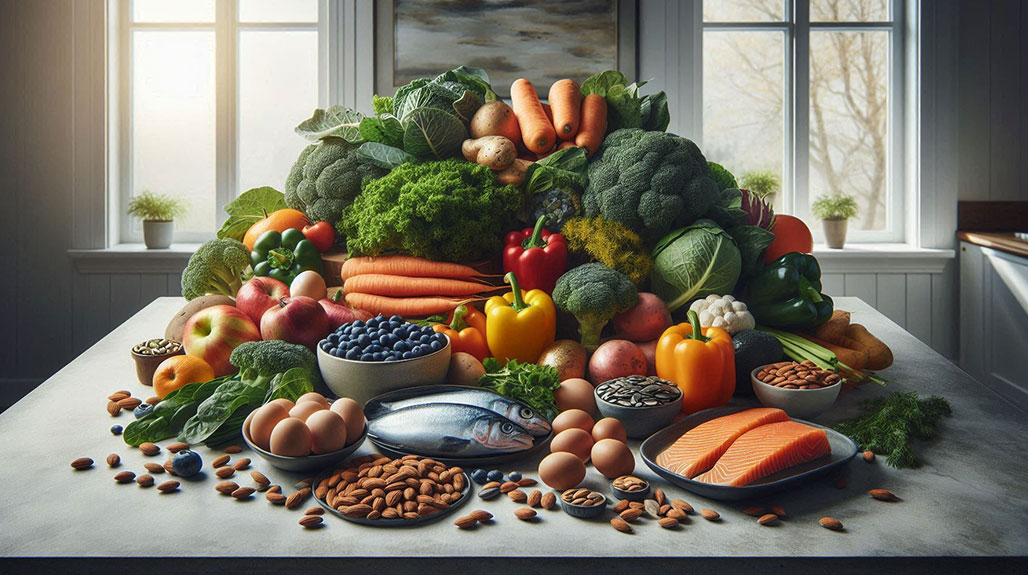
These foods provide nutrients such as:
- omega-3 fatty acids
- lutein and zeaxanthin
- beta-carotene (vitamin A precursor)
- vitamin C
- vitamin E
- zinc
The Importance of Good Circulation
Healthy circulation also supports eye function because the retina depends on a steady supply of oxygen and nutrients.
Foods such as beetroot, leafy greens, berries, and fatty fish can help support vascular health, which in turn benefits the small blood vessels that nourish the eyes.
Final Thoughts
Our eyesight naturally changes over time, but many of the habits that support healthy vision are surprisingly simple.
Good lighting, regular visual breaks, and a nutrient-rich diet can all make a meaningful difference for people who rely heavily on their eyes for creative or digital work.
For artists in particular, maintaining visual health is not only about preventing strain. It is about preserving one of the most important tools we use to experience and interpret the world.
Taking small steps to care for your eyes today can help ensure that creativity, focus, and visual clarity remain strong for many years to come.
 Previous Post
 Next Post